My dad is in his eighties. He has used the same green ledger book to manage his money for more than 60 years. Not an app. Not a spreadsheet. A physical book with handwritten entries, the same system he has been using his whole adult life.
It works. It has always worked. And watching him use it for decades is what gave me the idea for DivvyDup.
But the real reason I built it is not just my dad's system. It is what happened every time I deployed.
The Problem With Deployment and Finances
When I left for a deployment or a TDY, someone was back home running everything. The household, the kids, and the finances. All of it.
There is a real problem that military families know well: if the service member is the one who normally handles the finances, the people at home can be left without a clear plan. Which bills are due when. Where the money goes when the deposit lands. What to do if something comes up unexpectedly.
I needed whoever was home to have a system they could run without me there. Not something that required a call to explain. Not a complicated app with categories and reports and dashboards. A clear, simple plan: money comes in, here is where it goes, here is what each bill is paid from.
That is exactly what my dad's green ledger does.
How the System Works
The first page of my dad's ledger is the balance page. Deposits in, withdrawals out. Every other page is assigned to a specific bill or expense: mortgage, groceries, insurance, car payment, emergency fund, school supplies, utilities, whatever the family needs. Each one gets a page.
When a deposit comes in, he divvies it out across those pages based on the plan. Maybe the mortgage page gets $800. Groceries gets $300. The emergency fund gets $100. Every dollar is assigned before it gets spent on anything unplanned.
When a bill comes due, he withdraws from that page and deducts it from the balance page. He reconciles it against the bank account to make sure it all lines up. Every dollar has a purpose. The whole picture is visible at a glance.
It is a version of the envelope system, but better, because it is tracked, visible, and always balanced.
What I Built
DivvyDup is my dad's system, made digital and built for the way military families actually manage money.
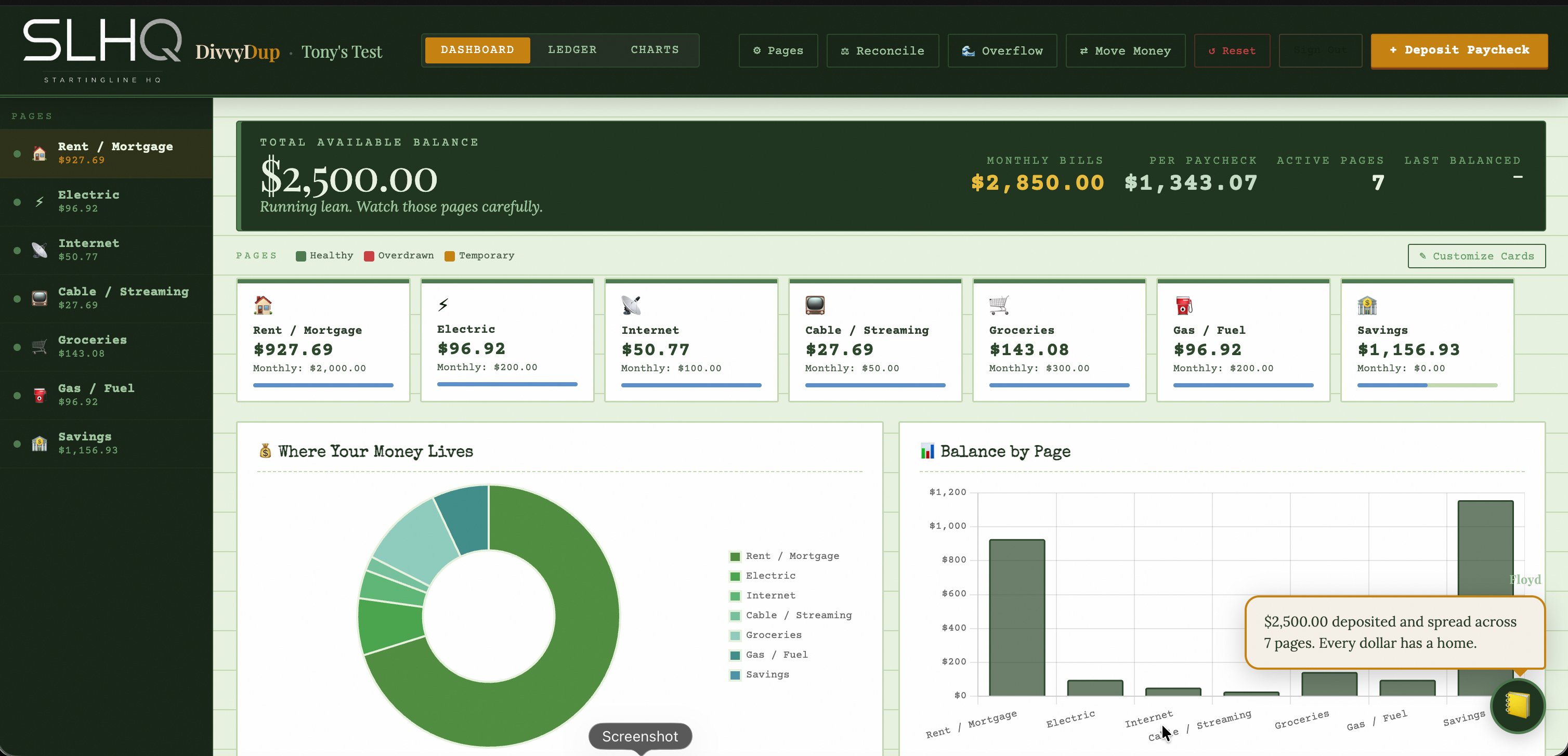
You create pages for each bill or expense category. When a deposit lands, you divvy it out across those pages. When it is time to pay a bill, you withdraw from that page and the balance updates automatically. Everything stays organized and visible.
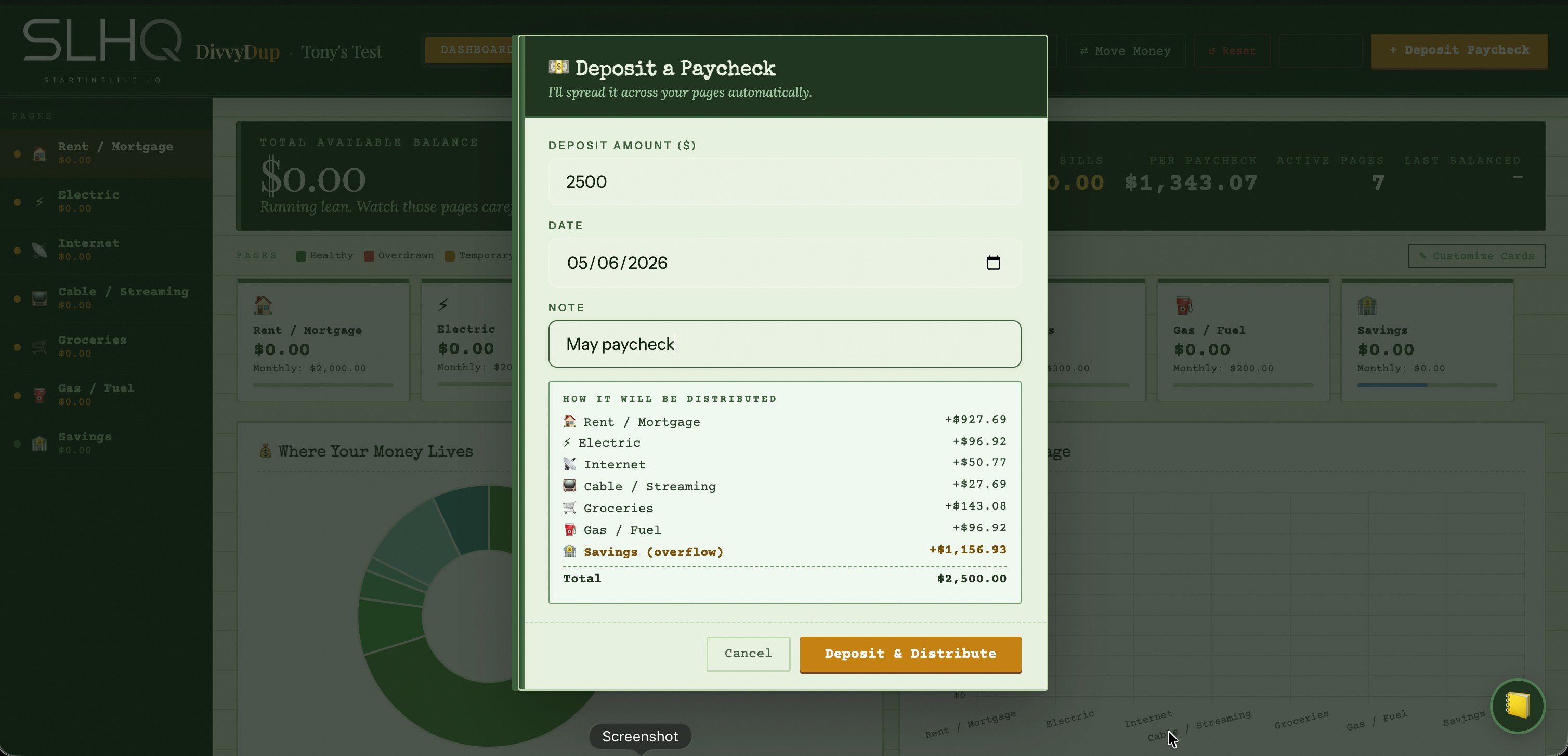
The auto-divvy feature is specifically what I had in mind for the deployment use case. When a paycheck or military deposit lands, it can automatically distribute the money across your pages according to a plan you set up in advance. The at-home spouse does not have to make the financial decisions from scratch. The plan runs itself.
If you look at the app, you will notice it keeps the green ledger feel. The lines, the layout, the sense of a physical book brought into a digital format. That is a deliberate nod to the system that has worked for 60-plus years.
Who This Is For
DivvyDup is for any household where financial clarity matters, especially when one person cannot be there to manage it in the moment.
That is a military family during a deployment. It is a first-responder household where one person is on a long shift and the other is covering everything at home. It is any couple where one person handles most of the finances and the other would not know where to start if something happened. It is anyone who has ever looked at their bank account after a few bills cleared and thought, where did that go?
My dad's system worked because every dollar had a job and the plan was always visible. You do not need a military background to benefit from that. You just need a household with bills to pay and a reason to stay organized. That is what DivvyDup gives your family.
DivvyDup. Every dollar has a purpose. The plan runs itself.
Learn more about DivvyDup.