Every service member who has ever deployed has thought about it at some point. Not in a dramatic way. Just a quiet question in the back of your head before you leave: if something happens to me, does my family know what to do?
Not the emotional question. The practical one. Does your family know where the documents are? Do they know which accounts exist, who the attorney is, what the will says, where the insurance policies are kept?
Most people do not have those answers ready. I know this because when my wife's mother passed away in October 2025, we became the executors of her estate, and we were not prepared. And she had actually started a binder.
What Happened
My wife's mother had been undergoing cancer treatments. She and my wife had begun putting together a small binder, contact information, a copy of the will, some login credentials, a few essentials. The intention was right. But life moved faster than the binder did, and it was about 10 percent complete when we needed it.
My wife became the executor. We hired a probate attorney to handle the legal filings. But beyond the legal process, everything else, the accounts, the subscriptions, the assets, the bills, who needed to be notified, what needed to be canceled, where everything was, we had to sort out ourselves.
It was overwhelming. Not because it was complicated. Because it was scattered. Spreadsheets, notepads, conversations, follow-up calls we forgot to make. We were making it up as we went because there was no system.
What This Means for Military Families
I have spent a lot of time thinking about that experience in the context of military service.
A service member deploying to a dangerous area is not thinking about estate planning. But they are thinking about their family. And the chaos my wife and I went through managing her mother's estate is exactly what a military family faces if the service member is killed or seriously injured overseas, except they are dealing with it while also managing grief, benefits claims, and everything else that comes with that kind of loss.
The documents are not organized. Nobody knows where the will is. The accounts are a mystery. The spouse has to sort it all out from scratch at the worst possible moment.
EstatePal exists so that does not happen.
What I Built
I built EstatePal while we were managing the estate. Not as a theoretical tool, as the tool we actually needed and did not have.
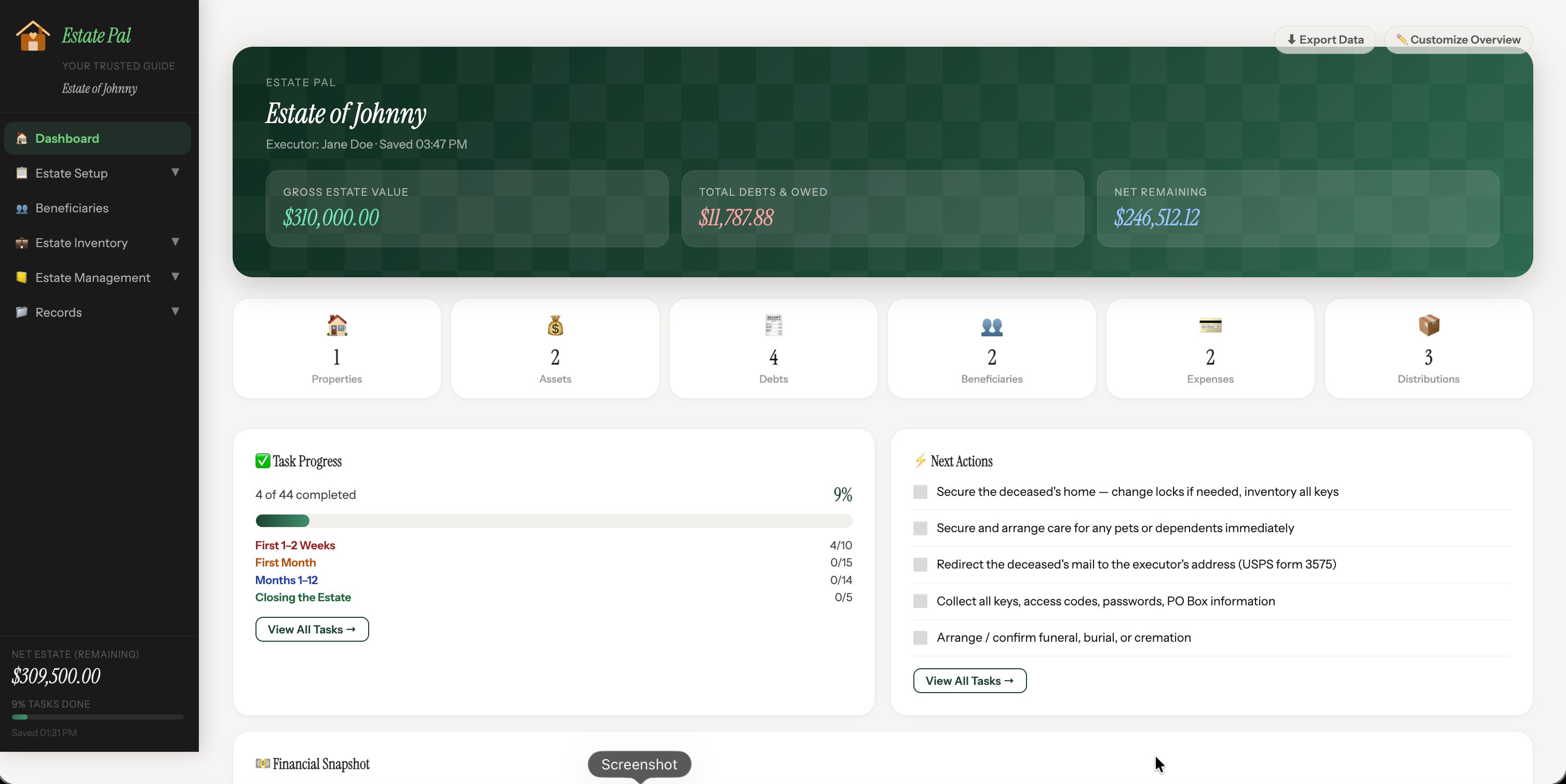
The idea is simple. While you are alive, you organize everything: your documents, your accounts, your contacts, your wishes, your beneficiaries, your military paperwork including your DD214. You put it all in one place. When something happens to you, your family does not have to search for any of it.
For active-duty service members, this means your spouse knows exactly what to do and where to find everything, from the moment you deploy, not after something has already happened.
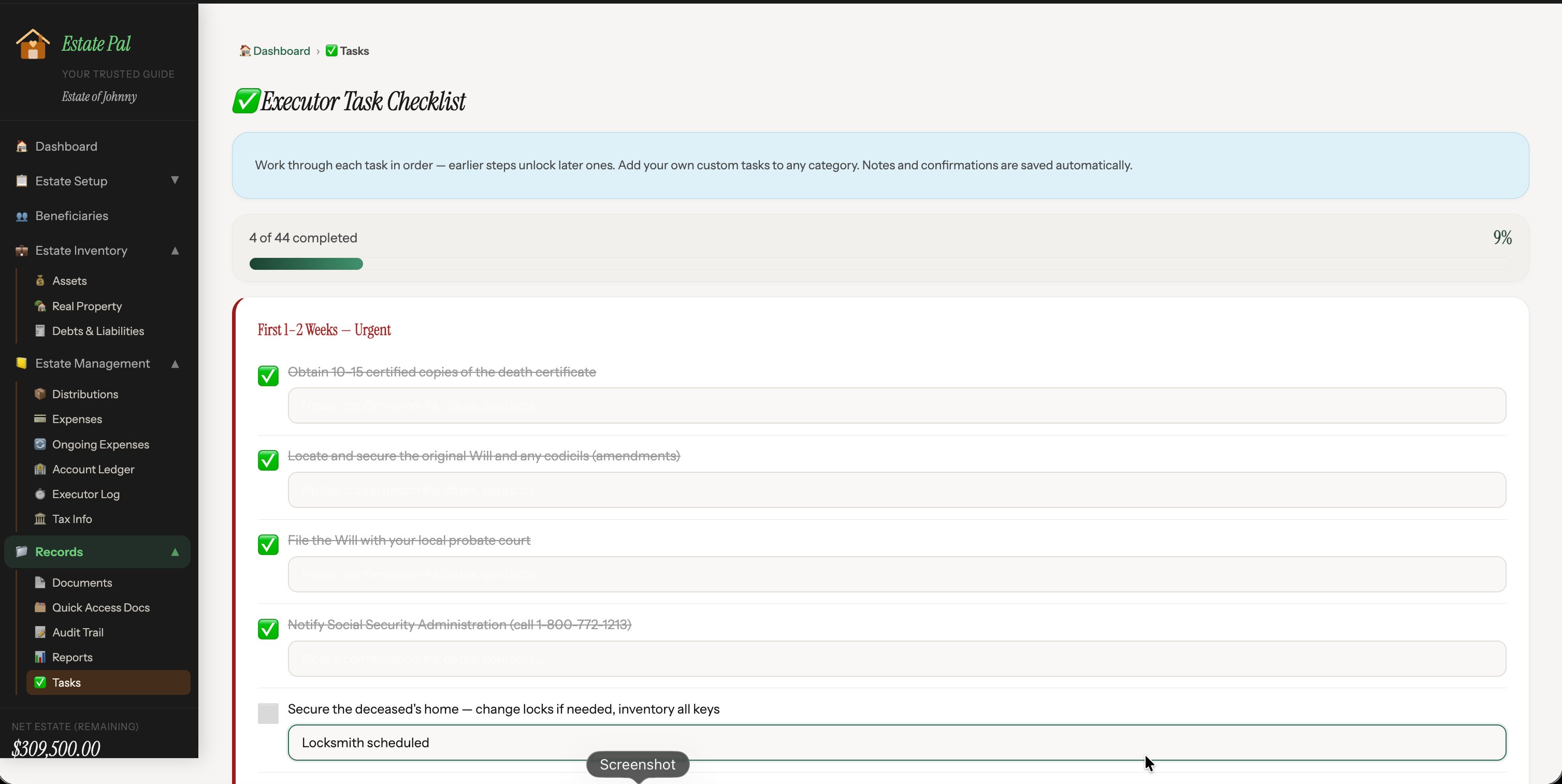
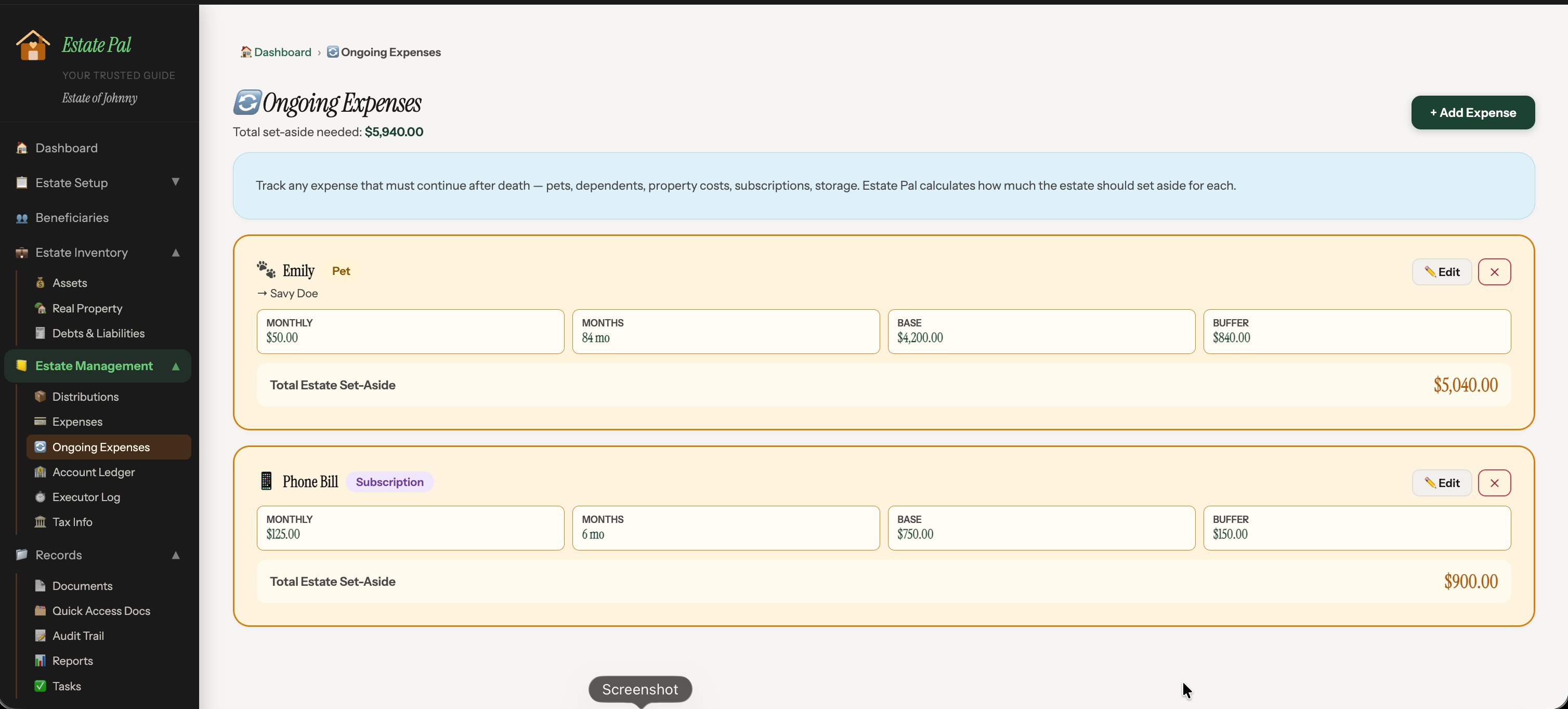
EstatePal also handles the executor side: checklists with deadlines, a ledger for the estate account, distribution tracking for beneficiaries, reports for tax filings. Everything we had to build manually in spreadsheets is built into the product.
We Are Still Using It
We are still using EstatePal today to manage my wife's mother's estate. It was not built as a demo. It was built because we needed it, and we are using it to prove it works.
The legacy version of the app, Lorraine's actual data, is kept frozen and separate. The live version keeps improving based on what we learn from real use.
If You Have Been Putting It Off
Estate planning feels morbid. It feels like something you do when you are old, or when you have a lot of money, or when you have more time.
For military families and first responders, it is not optional. It is the plan your family runs if something happens to you. The more organized it is, the less they have to figure out on the worst day of their lives.
But this is not only a military problem. Most families have no organized estate plan. Most people in their 30s and 40s cannot name their current beneficiaries on every account. Most households have never had a real conversation about where the documents are or who handles what if something goes wrong. The chaos we dealt with managing my mother-in-law's estate is not unusual. It is the default.
EstatePal is how you put that plan in writing, whether you have ever worn a uniform or not.
EstatePal. Your family knows what to do. Because you made sure they would.
Learn more about EstatePal.