How EstatePal Started: A Family's Crisis Became a Tool to Help Everyone
When my wife's mother passed away unexpectedly in October 2025, we weren't prepared. Nobody really is.
She'd been undergoing cancer treatments, so my wife and her mother had started putting together a small binder—contact information, a copy of the will, some login credentials, a few other essentials. The idea was solid: if the worst happened, we'd have something to start with. But life moves faster than we expect. The binder was only about 10 percent complete when we needed it most.
My wife became the executor of the estate. We had a probate attorney handle the legal filings and help us get the letters of testamentary, but beyond that? We were on our own. And suddenly we realized just how scattered everything was.
The Spreadsheet Era
We started tracking everything in spreadsheets and notepads. Who did we need to contact? Where were her passwords? Which accounts needed to be canceled? What were the investments? What bills were still active? Where was the truck? What subscriptions were running? Which assets needed to be dispersed to my wife and her sister?
It was overwhelming. And it was scattered across multiple documents, conversations, and notes. We'd contact someone, make a note, lose track of what came next. Every decision felt like we were making it up as we went—because we were.
The probate attorney could tell us about the legal process, but nobody could tell us how to organize everything. There was no roadmap. No central place where all of this lived.
Building a Solution
As I started managing all these moving pieces, I realized: I should build a tool for this. Not just for our situation, but for anyone who becomes an executor or needs to organize an estate.
The original idea was simple: instead of creating a messy binder that only gets 10 percent filled out, people could set up an electronic version while they're still alive. They'd organize their documents, their contacts, their accounts, their wishes—all in one place. Then when something happened, their executor would have everything organized and ready.
That's how EstatePal was born.
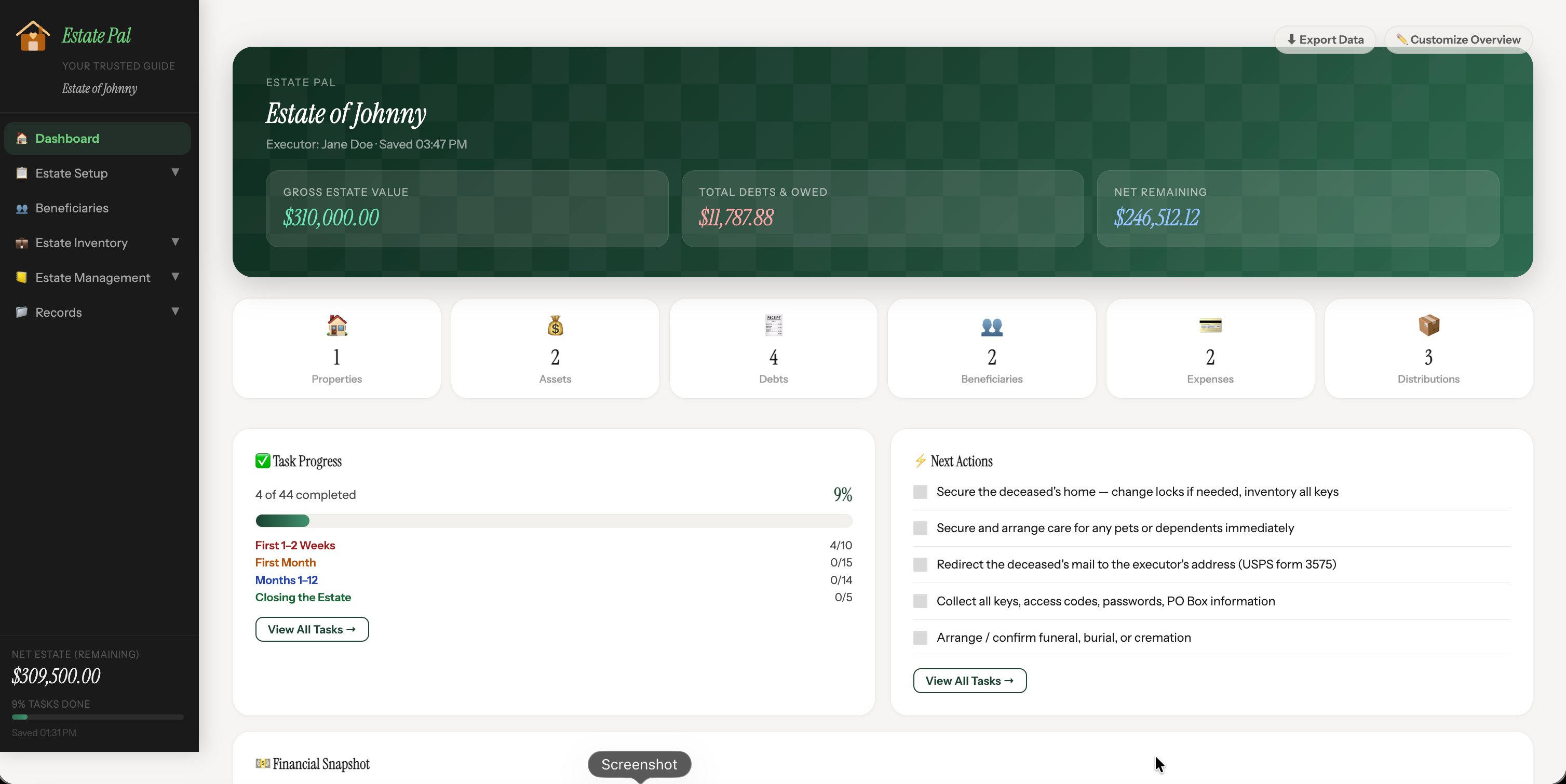
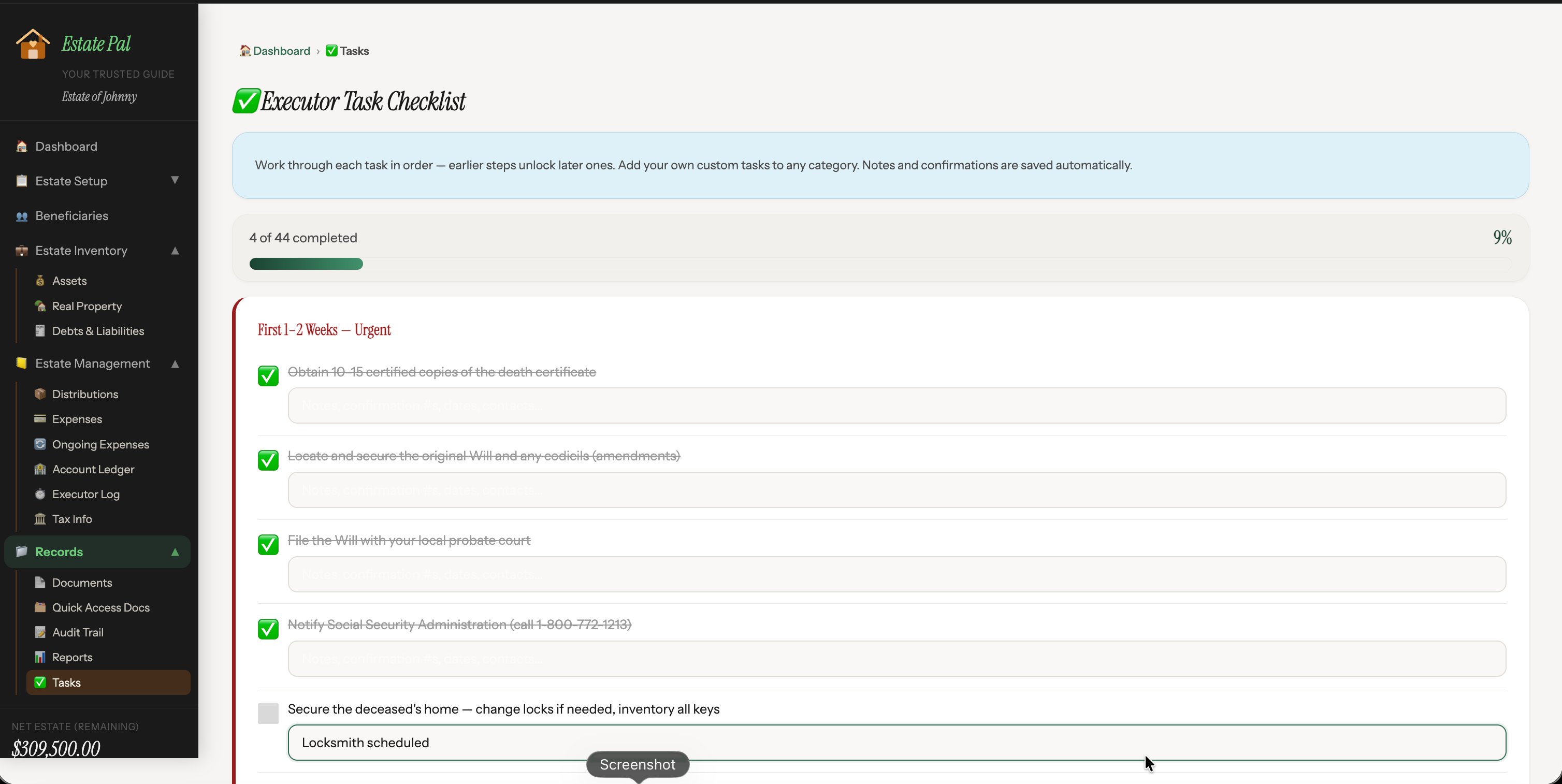
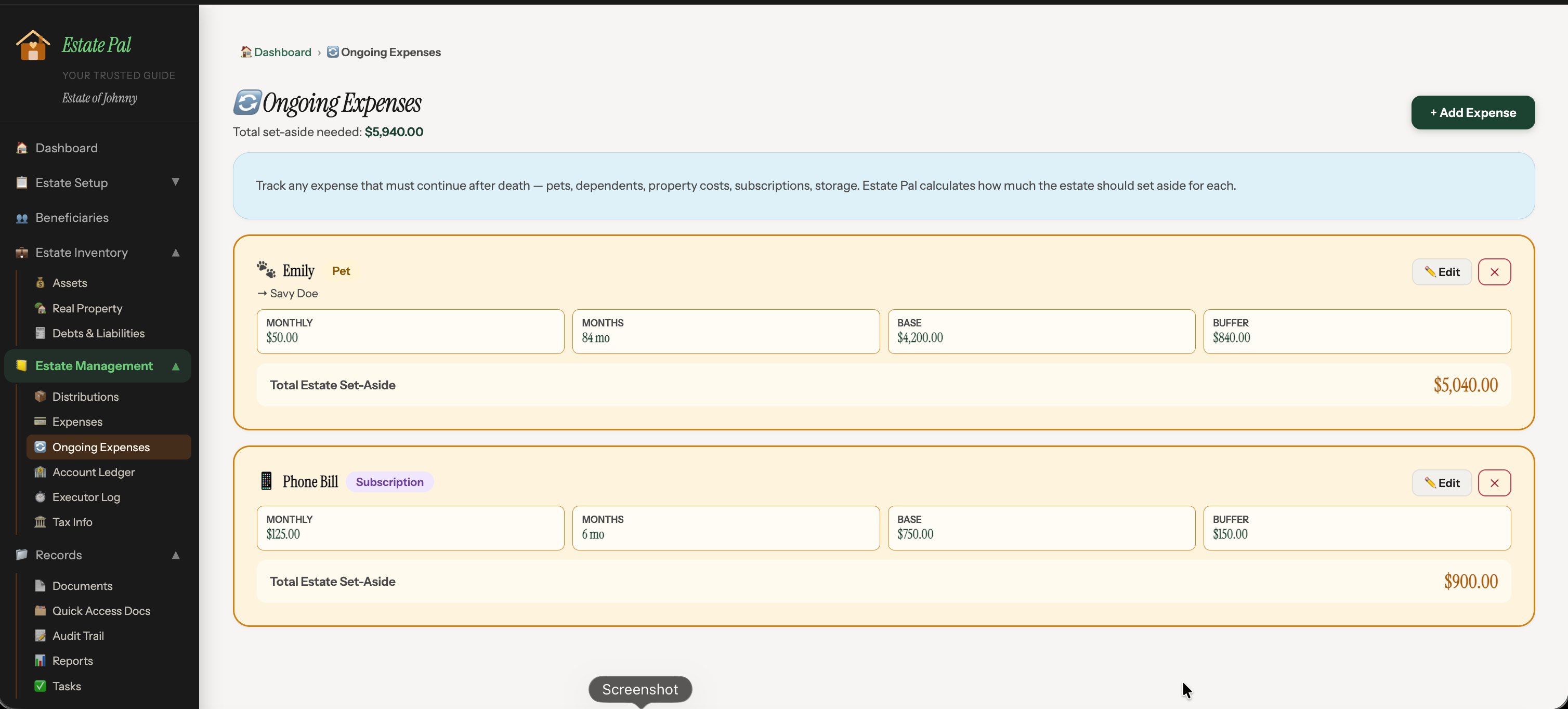
We took what we learned managing my wife's mother's estate and built it into the product. We needed to track distributions to family members, generate reports for taxes, maintain a ledger of the estate account, track which bills were paid and when. We needed EIN numbers for final tax filings. We needed checklists with timelines so we knew what was due next and how many days we had. EstatePal organized all of it.
Over time, we added features based on real needs we encountered: military documentation (DD214 forms), better ways to track beneficiaries, cleaner organization of assets and accounts.
Still Using It Today
Here's what matters: we're still using EstatePal today to manage the estate. We didn't build it as a theoretical exercise. We built it because we needed it, and we're proving it works by using it every single day.
The legacy version of the app is frozen—we wanted to protect all of Lorraine's real information and keep it exactly as it was when we set it up. But the live version has continued to evolve with new features and improvements. That separation lets us keep her data safe while making EstatePal better for everyone else.
Why This Matters
If you ever become an executor, or if you're thinking about what happens to your digital life, your accounts, your documents—EstatePal exists because we've been there. We know how chaotic it is. We know how many conversations and decisions happen all at once. We know how easy it is to lose track of something critical.
You don't have to figure it out with spreadsheets and notepads. There's a better way.
EstatePal is part of the StartingLine HQ suite of tools built to help you organize the parts of life nobody prepares you for.
Ready to get organized? Learn more at estate-pal.com